
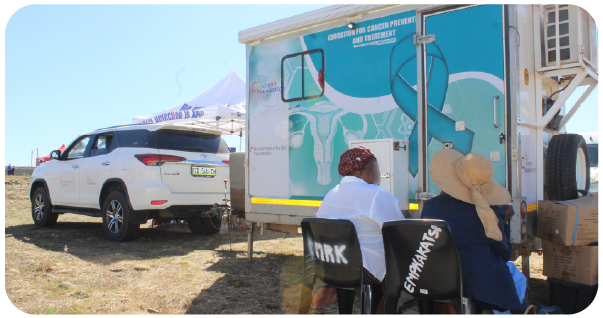

Cervical cancer is the leading cause of cancer related deaths among women in Eswatini, although almost entirely preventable through regular screening.

Baylor Foundation Eswatini, in partnership with local organizations (the Eswatini Breast and Cervical Cancer Network, and FAWESWA), led a groundbreaking initiative to create cancer awareness among individuals in communities and conduct screening and education of community members including clients enrolled in our clinics for breast, cervical, lung, prostate, and pediatric cancers. Furthermore, women eligible for cervical precancerous treatment receive treatment through this initiative.

In the last year this program has screened 4,516 women for cervical cancer: 37% via pap smear and 63% via VIA, enabling expanded screening for women aged 20–49 with on-site treatment.

HIV Testing Services (HTS) are central to achieving the first ‘95’ of the UNAIDS 95-95-95 targets through early diagnosis and linkage to treatment. At Baylor Foundation Eswatini, HTS anchors comprehensive, family-centered care, using HIV-exposed infants as index cases to extend testing across households. Pre- and post-test counseling promotes healthy behaviors, contact tracing, and distribution of HIV self-testing kits. Targeted testing reaches high-risk populations.
Over the past year, 592 HIV tests were conducted; 17 individuals (3%) tested HIV-positive: 3 infants under 2 years, 3 children aged 2–9 years, 0 adolescents aged 10–19 years, and 11 adults aged 20+ years. All were initiated on ART.
Baylor Foundation Eswatini contributes vast pediatric expertise at a national policy level as a member of Eswatini’s HTS Technical Working Group, which is part of the country’s AIDS Programme to achieve an HIV-free generation and an AIDS-free population.
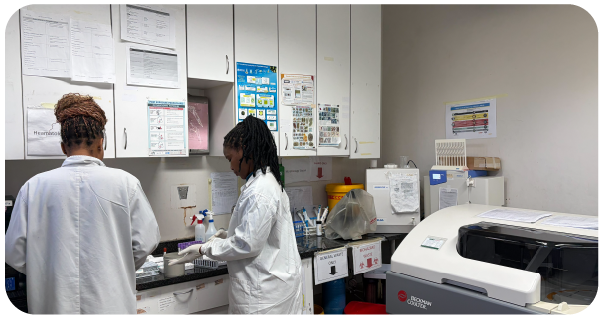
At Baylor Foundation Eswatini, our state-of-the-art laboratory provides accurate, timely, and reliable diagnostic services that support high-quality patient care. We offer a comprehensive range of testing services, including Hematology, Clinical Chemistry, Flow Cytometry, Tuberculosis (TB) GeneXpert and Smear Microscopy, Point-of-Care HIV Viral Load, and Early Infant Diagnosis. Our laboratory is committed to maintaining the highest standards of quality, precision, and efficiency in every test we perform.
To ensure transparency and support clinical decision-making, we provide clear turnaround times for all laboratory tests. This allows healthcare providers and patients to make informed decisions while demonstrating our dedication to prompt, dependable service. Through advanced technology, skilled professionals, and a patient-centered approach, our laboratory plays a vital role in delivering exceptional healthcare across Eswatini.
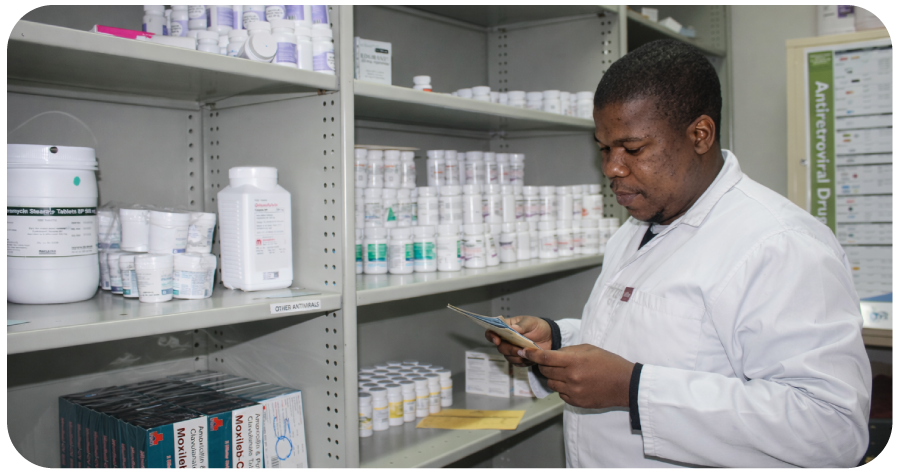
This year, Baylor Foundation Eswatini achieved full decentralization of the pediatric third-line antiretroviral therapy (ART) program by strengthening national capacity through monthly Africa Advanced Pediatric Clinic calls, virtual case consultations, and continuous medical education (CME) with virologists and HIV specialists in South Africa and across the Global Health Network. In November 2024, the Foundation supported a national three-day residential HIV drug resistance (HIVDR) training.
The former ‘Challenge Clinic’ was rebranded as the ‘Siyancoba Clinic’ (“we are conquering”), emphasizing psychosocial support for children living with HIV who are inconsistently taking ART and reinforcing empowerment, dignity, and hope for clients with high viral loads.
The pediatric team launched a free online platform using open-source tools, enabling all facilities in Eswatini to submit genotype requests for National Third-Line Committee review, approval, and tracking—advancing large-scale digitalization of pediatric data systems. The Foundation also conducted national HIVDR training for 26 physicians and supported antiretroviral commodity forecasting.
Currently, 61 clients are actively managed in the decentralized third-line ART program.
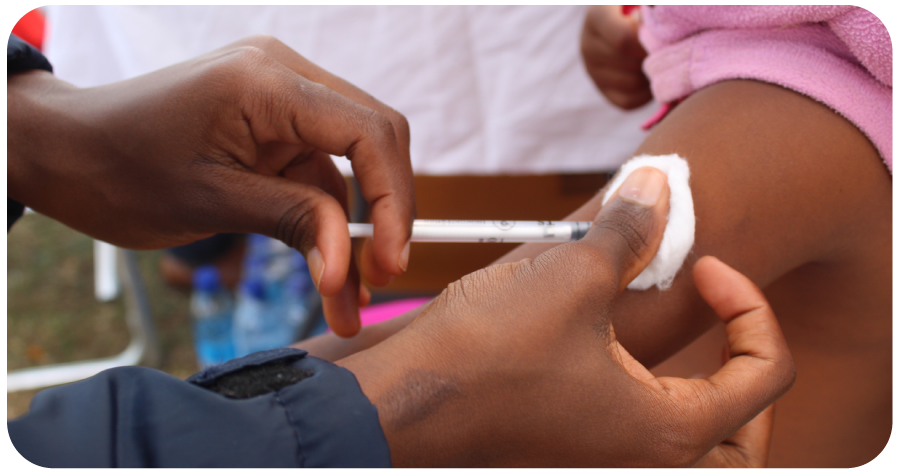
Integrating routine child healthcare services into HIV/AIDS care and treatment is a core mandate for Baylor Foundation Eswatini. Clients are vaccinated against communicable diseases, including TB, diphtheria, pertussis, tetanus, hepatitis B, polio, HPV, and measles. They are also screened for TB and other diseases often associated with a compromised immune system. As needed, children receive vitamin A supplements, deworming tablets, and RUTF (“Plumpy Nut”), and food supplements provided by the United Nation’s World Food Program’s Food-by-Prescription project.
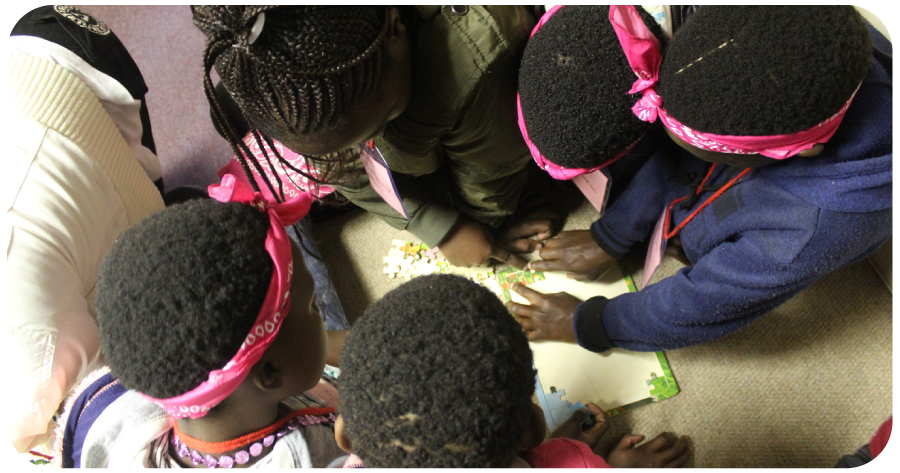
In combination with our HIV/AIDS testing and treatment, we offer routine child healthcare services, such as immunizations and TB screening.
Our support programs, such as Teen Club and Sibancobi Camp, allow the clinic to be a place of empowerment and emotional growth as well as a place of high-quality medical care and scholarly activity. The psychosocial resources (depression screening, disclosure support, home visits, and more) round out our integrated approach to healthcare, addressing the emotional, physical, and mental health needs of our clients.
At Baylor Foundation Eswatini, we adhere to a family-centered model of care that extends beyond the service delivery to our young clients, but their caregivers and siblings as well. This includes offering services such as family planning support, cervical cancer screenings and treatment, HIV testing and treatment, TB testing and treatment, and counseling/psychological support for the entire family unit.
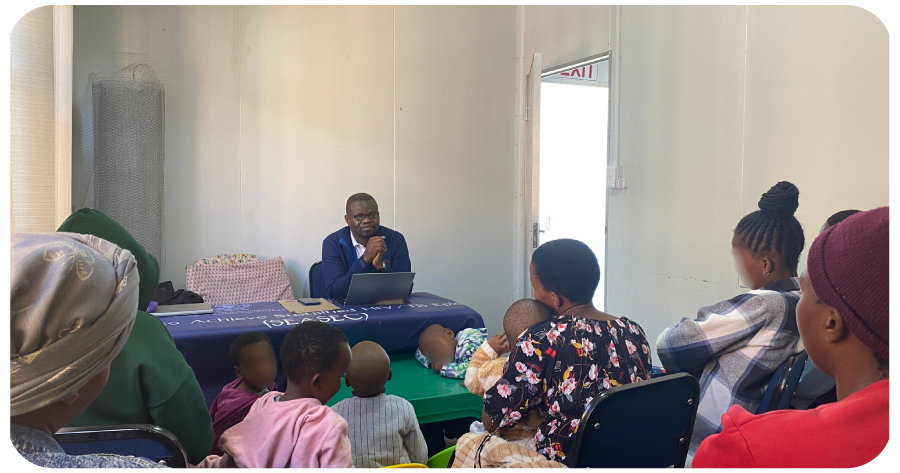
All pregnant women with unknown HIV status receive HIV Testing Services (HTS) at Baylor COE. Those who test positive are enrolled in the Prevention of Mother to Child Transmission (PMTCT) program and initiate antiretroviral therapy (ART). Adolescents are routinely screened for pregnancy and begin antenatal care if positive. During the reporting period, 82 women accessed antenatal services, including 5 adolescents aged 12–19.
The mother-baby-pair (MBP) model ensured continuity of care and achieved zero seroconversions (100%) at 19 months. Our holistic approach integrates antenatal care, ART, family planning, infant testing, education, psychosocial support, and viral suppression services. The social work department is a critical piece of this care system, helping mothers overcome anxiety and obstacles to treatment and ensuring we can provide better care for whole families.

Baylor Foundation Eswatini follows the four- pronged approach to PMTCT: preventing HIV, preventing unintended pregnancies in women with HIV, preventing HIV transmission from mothers to infants, and supporting those who are living with HIV. Reducing unintended pregnancies in women, especially among adolescents and women living with HIV, is also a part of the government’s SRH strategic plan. Baylor Foundation Eswatini supports this mission by providing a broad range of family planning methods, ranging from condoms to hormonal contraception. In the last year, 124 adolescents (12–19) accessed services, including 52 new acceptors; 88 new adult acceptors (20–49) were recorded, with 741 adults active in family planning.
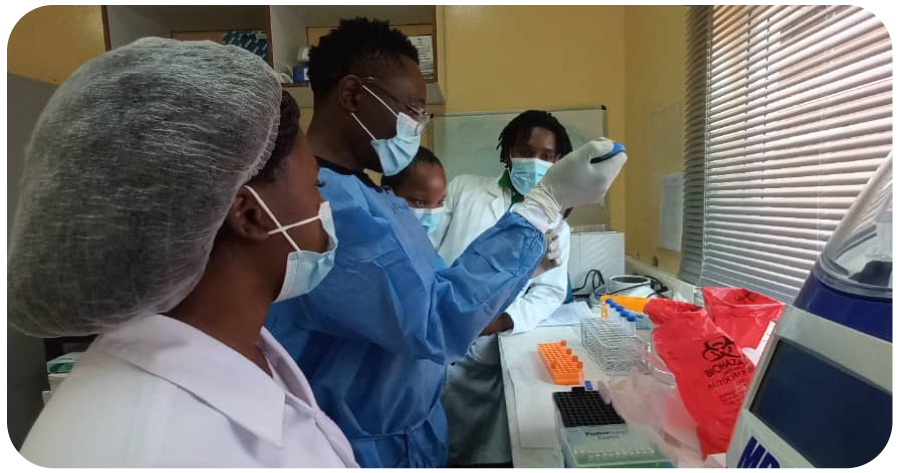
As the Ministry of Health’s primary pediatric TB care provider, Baylor Foundation Eswatini continues to provide high-quality, integrated TB/HIV care for clients and family members at risk, as well as conduct research that informs internal and national policy. Our TB operations are carried out in collaboration with the Global TB Program at Texas Children’s Hospital and Baylor College of Medicine.
The TB Centre of Excellence (TB COE) in Mbabane offers onsite digital radiography and rapid TB diagnostics—reducing the time to diagnosis and treatment for clients to same day.
Innovations in Care: In collaboration with the Foundation and the National TB Control Program (NTCP), our team rolled out the CAD4TB AI application into routine pediatric care, training 25 clinicians, triage teams, radiographers, and front-desk staff to strengthen early TB detection. Integration into patient flow improved TB screening, diagnostic accuracy, and triage, supporting Eswatini’s child survival and TB elimination goals.
In December 2024, the Foundation laboratory introduced GeneXpert Viral Load Point-of-Care (POC) testing, expanding its public health impact.